Five reasons to be stoked on SA

Most of us know someone who has emigrated, or is about to emigrate. After several hard years for our nation, it can sometimes seem like the bad is overwhelming. And, the South African media often seem to talk about nothing except the next new ‘sure disaster’.

But it’s not all bad. There are some great things about being in South Africa right now! We’re not talking about the weather. Wherever you are, looking on the sunny side helps, whether you’re waiting for your green card or maybe sitting around the braai talking about the latest Moody’s rating.

Here, courtesy of Business Insider’s Helena Wasserman, are five reasons to be stoked you’re a ‘Saffer’:

1. Visitors are liking the vibe

South Africa relies heavily on tourism – which is why Statistics SA’s latest news was so great. After the bumper Easter travel season, Stats SA revealed the latest tourism figures ending after April. According to them, over 217 000 overseas tourists arrived in April this year – that’s a whopping 11.9% more than in April 2018. In terms of who our favourite visitors are, Europe still reigns supreme, with 25% more UK tourists and over 30% more Germans. Nations of good taste!

2. Exports are also excellent

If we’re dependent on people coming in, we’re almost as dependent on selling produce outside. According to Wasserman, who quotes the most recent Sars figures: “Exports jumped more than 8% to R112 billion” and “South Africa recorded a R1.74 billion trade surplus in May. This means we exported more than we imported.” This is huge, for a country with a bias towards foreign goods.

3. No rate cuts means easier spending

Two snippets of good news here: firstly, the South African Reserve Bank’s Monetary Policy Committee issued a substantial rate cut of 25 basis points last month. An interest rate cut effectively means it’s easier for us to spend and borrow from institutions – our rands aren’t more expensive than they were before but rather less. This makes it slightly easier for us to spend and support our local businesses, which indeed is what a rate cut is designed to encourage.

Then, on 18 August, at their next meeting, the tide seemed neap enough for interest rates to remain unchanged for the rest of the year. This means that not only is it effectively cheaper to buy and borrow than before but it is unlikely to increase all year.

4. Best of all? The economy is perking up

Yes, you read that right. A number of industries seem to be having a much happier and more productive season than many lately, with the numbers to match. According to Wasserman, “Manufacturing output increased by 4.6% in April 2019 compared with April 2018, with vehicle sector manufacturing up almost 19%. Wholesale trade sales rose by 5.5% in April 2019 (compared with April 2018) while retail trade sales rose 2.4%. Retail sales of clothing and footwear jumped more than 6%, and of household furniture, appliances and equipment by almost 5%.”

5. About those Moody’s ratings…

This will give you something to say to those naysayers around the braai. According to Wasserman, more and more fund managers are of the opinion that Moody’s won’t ‘junk’ SA after all. Last month, only a quarter of the international fund managers surveyed by Bank of America Merrill Lynch believed that we would not be kicked out of the index. This has now increased to 50% – this means that half of fund managers now expect us to keep our investment grade rating from Moody’s. On top of that, the survey also shows that for the first time in six months, managers see our bonds as ‘undervalued’,” she says.

So, perhaps South Africa is actually alive with possibility, after all? It just goes to show, sometimes it pays (financially) to look on the bright side.


Diversifying happiness

The ancient philosopher Aristotle came up with a single word for what every person wants: ‘Eudaimonia’.
Eudaimonia means happiness but more than that it alludes to a sense of fulfillment.

Many people have viewed financial planning as the management of financial goals and resources. Typical conversations would include questions like: “How much will my assets grow, how can I get X amount by the time I am this age and what will my retirement look like?”

Whilst these have been helpful questions, we are learning that they are only part of a fuller conversation. There are different questions that are starting to emerge in our conversations that are focussing more on meaning and purpose. They are not as easy to answer (sometimes they don’t need answers just yet…) but they help us frame the bigger picture of how we’d like to use our wealth for a fulfilling life.

It’s not only our wealth strategies that need to be diversified for healthy growth but our happiness strategy too.

This Spring, we suggest these happiness diversification exercises.

Exercise your way to happiness

Now that it’s getting warmer outside, it’s time to get our bodies moving again. According to a recent research study, exercise makes people happier than money does. People who stay active are better equipped to deal with stress and have less days when they feel down or depressed.

That’s not too say that too much exercise isn’t a bad thing – it’s important to have a balance and not over-exercise. Either extreme can be detrimental to our experience of happiness, but a healthy balance is a powerful way to experience eudaimonia.

Prioritise experiences and people over possessions

Invest in making priceless memories in life. Instead of buying that luxury car you do not need, try saving up for a family holiday. Going out with friends or family to concerts, movies or picnics are just some of the happy experiences you can give yourself in life. Prioritise taking walks in nature, reading a book or playing a game with your kids.

Believe in something bigger than yourself

As we spend time with other people outside of a working relationship, it becomes easier to see and believe in something bigger than our own reality. It’s not about faith or religion, it’s about connectedness. If we want to find more ways to invest in our fulfilment we need to experience generosity to causes that are bigger than ourselves.

Fulfilment, happiness and productivity should grow when we contribute to others. It’s a healthy circle of sustainable growth that is not reliant on market performance or bank balances. Being willing to ask bigger questions and find deeper meaning to our wealth is where we can begin to experience eudaimonia.

Take the dread out of disease cover

A lot of people misunderstand the term ‘dread disease cover’… and with that name, it’s enough to take the smile out of anyone’s day. But dread disease or CI (critical illness) insurance is a powerful tool to ensure that health emergencies don’t trip up your financial dreams or weigh heavily on your family.

Dread Disease Cover vs Disability Cover

Sometimes called CI cover, dread disease cover is different to disability cover, which protects you and your finances after an accident temporarily or permanently leaves you unable to work. In a similar way, dread disease cover is there for when a health setback floors you temporarily or for a longer period of time. From strokes or heart attacks to serious illnesses like cancer, this cover helps you focus on your recovery without having the added stress of loss of income each month just when your medical and associated expenses are skyrocketing.

Dread disease cover isn’t about dying… it’s about surviving

When the average person thinks of cancer, a tumour or a stroke, they imagine the worst. And no one likes thinking about it… it will never happen to us anyway, right?

But in reality, these things are more common than we realise and are not a death sentence – far from it.

“Statistics confirm there is a high likelihood of contracting a major illness such as heart disease or cancer. And thanks to advances in medical technology, people are more likely to survive these illnesses than ever before,” Old Mutual’s Ferdi Booysen says in insurance publication FA News.

Get peace – get well

Research shows that one of the single biggest impediments to recovery in any illness (barring chronic mental illness) is stress. Research also shows that finances are one of the biggest things that people are concerned about when ill – a vicious and ironic circle.

And they’re not wrong. There are lots of little unforeseen expenses surrounding illness and hospitalisation. Even if you have an amazing medical aid in place, there will be things the medical aid doesn’t cover. And what about other things you may need, like therapy for you and your spouse after the trauma of a stroke?
With dread disease cover, it’s easier to relax and focus on recuperation knowing that everything is in place. In fact, most CI cover pays out a lump sum so that you can decide what’s important for your recovery journey.

But don’t just survive – thrive

Falling seriously ill or having a health episode is never pleasant, but it is a fact of life – and it needn’t be the end of it. In fact, it can be the start of a whole new one.

Those who have experienced these things with the support of insurance and the ability to focus on themselves rather than being forced to work when physically unable, often describe their journeys as powerful wake-up calls that helped them re-prioritise and improve their lives, relationships and trajectory.

So don’t just pretend it won’t happen to you and don’t just survive – thrive.

Mind the gap within

What you think you can do and what you can do are not the same thing. What would you try with your finances if you couldn’t fail?

When it comes to the things we want in life, most of them are inextricably linked with our finances.

Buying the dream home for your new family requires money. The time to spend precious quiet moments with those you love requires finances, too, to keep and maintain life’s endless demands and bills as you smell the roses for a minute, a week or a well-earned holiday. The peace-of-mind that allows you to weather life’s storms requires integrated financial management.

Research and experience are clear: reward follows risk; fortune favours the bold. The more you ‘do’ with your money over various asset classes, the harder it works for you. And we all want our money to do that.

And yet, a curious thing happens in the minds of most people when they contemplate the words ‘financial management’ and ‘financial advice’. They picture someone older, wealthier, probably in a suit, probably with a spread of complex assets in various locations. Maybe something cleverly tax-evading in the Cayman Islands. ‘It’s alright for them,’ people say, picturing this person, but not for me.

What is interesting about this suited, older individual? They almost never actually exist. It is a stereotype we make up in our own minds. And that stereotypes excludes us.

If you have never met with a financial adviser, or never traded in the stock market, or never invested in equities or offshore, why not? Is it because, secretly, you equate those things with someone who is wiser in years, has more money to throw around and more financial acumen? Does this person even exist? What if you knew that most of the people who invest in equities, stocks and offshore products… are people just like you?

There is only one difference between people who do and people who don’t: somewhere, somehow, they received permission to try, so they tried. Trying closes the gap.

When the sky didn’t fall if they failed, they would try again. Well, today – here’s your permission slip to try!

However, here’s the caveat: Trying something new with your finances should happen within the scope of your lifestyle financial plan.

In finances you can fail, and fail badly. An imprudent financial decision has wrecked people’s finances, their futures, marriages and hopes.

That is why the importance of a financial adviser/coach/partner cannot be overstated.

Reward follows risk and fortune favours the bold. So, we need to be able to take risks and be bold if we want to see our financial resources grow to meet our lifestyle goals.

A good financial adviser will never push you towards the latest, hottest thing at the risk of your livelihood. A trusted financial adviser is the opposite of the gambling spirit which takes so many life savings away. Risks that are worth taking and opportunities that are worth trying will always have the potential to push you forward, not destroy your future entirely.

It’s worth a try…

The seven habits of cyber secure people

It’s not for nothing that cyber crime and hacking was considered 2019’s number one “major risk” by the world’s largest insurer, Allianz, in their latest Risk Barometer Survey. These days, it’s not if the security of your electronic identity and assets will be tried by a criminal, it’s when.

While no one is completely guaranteed safe from a cyber attack, these seven habits will mean that you’ll be a harder target than someone else and so, by default, cyber secure.

1. Cyber secure people never use free WiFi
South African speaker and social media legal expert named Emma Sadleir has a wonderful saying: ‘when something is free, you are the product.’ Don’t ever use a network that you don’t need a password to log onto, or even one that’s free. Hackers often either set up their own (very legimate-seeming) hotspots or sit in an existing one waiting for prey.

2. Cyber secure people use two-bit encryption
The more encryption you can use, the better. People who are secure online use systems where they will be told of logging on to banking and all banking steps via email or SMS and get One Time PINS (OTPs) for everything. OTPs make use of two-bit encryption and if you don’t have the code, you can’t complete the transaction. This sort of security is far harder for a hacker to hack and so, usually, they won’t go near a bank account with two-bit encryption.

3. Cyber secure people never, ever, ever give someone else their login details
There is a chilling tale of a savvy business woman who was called by her ‘bank’. They had her ID number, they had her card number. They just needed her PIN, please. They even had a call-back mechanism which directed her to her bank’s authentic call centre. She almost fell for it. Here’s the thing – no bank will ever, ever ever EVER ask you to type in your PIN, say your PIN or write your PIN down. The same goes for your username and password. It doesn’t matter if you’re in the bank itself. Never write down, say or otherwise disclose those three things.

4. Passwords are never easily guessable with the cyber secure
Anything that could be guessed at by someone who isn’t your spouse or mother isn’t safe for a password or PIN, including your birthday, anniversary, year you were born, address or ‘1234’. That goes for your security questions that the bank asks you too. Don’t just put your high school or first job – someone could stalk you on Facebook and find that out. In fact, criminals use this trick all the time.

5. Cyber secure people have varying, different passwords
This one, many of us are guilty of. Not many of us have unsecure passwords like our birth dates, 1234 or the word ‘password’ anymore. We have one strong and hard-to-guess one with upper and lowercase letters, numbers and symbols in it – but only one. It’s so much easier to just remember one password, isn’t it? But cyber criminals know that too, and so they know that they just need to get your details off one not-so-secure site and then it’s open sesame for everything else. So, use different passwords – completely different.

6. Cyber secure people are wary of personal info on groups
Those not-too-safe sites we just mentioned? Well, few are as unsafe as groups on WhatsApp, Facebook and Telegram. Especially not those really large ones where you don’t know each individual on there very well. We don’t care if it’s the church group or the over 70 year-olds’ group – don’t send any personal info including bank details and your address. You never know who is part of the group and looking for information.

7. … Or Gmail
This may come as a shock, but some cyber experts consider Gmail accounts easily hacked and not too safe. The extreme popularity of them might be one reason but, just to be safe, do not send sensitive information over Gmail if you can help it.

Remember, we can’t be 100% secure online as new hacking techniques are being unceasingly developed – but we can be mindful of our online security. If you are ever in doubt, update your passwords.

Running on empty – is it time to fill up your tank?

Are you the type of person who

  • puts in a little petrol here, a little petrol there, or
  • enough to last you the week based on calculations you’ve done of what you need, or
  • are you someone who fills your tank up every time you visit the garage?

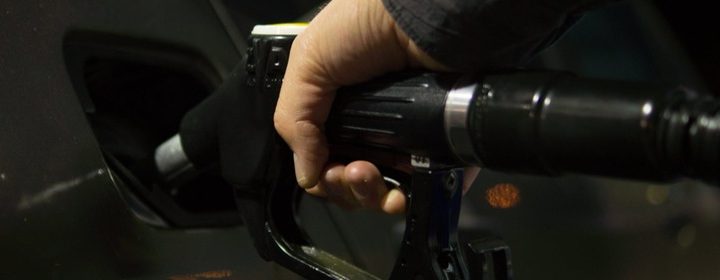
The petrol price has become a touchy topic, with all the gruelling petrol price hikes South Africans have endured, but actually your petrol tank philosophy can reveal a lot about the kind of life you lead.

Whilst filling up your tank of petrol has physical costs and constraints, filling up your life thank can cost considerably less than your monthly fuel-spend.

Which mindset are you?

There is a concept called the ‘poverty mindset’ which was pioneered some years back. People who are afraid of spending money to the point of being illogical, are often suffering from it – and don’t know it. This mindset causes us to operate from pay-cheque to pay-cheque and constantly feel like we don’t have enough money, time or energy.

It often means that we’re constantly chasing ‘the next big thing’ and not spending enough time enjoying who and what we have in life right now. We have the perception that because we’re so busy, our lives are full – but in reality, our lives are constantly running on empty.

The first step in filling up your life tank is to have a desire to change your mindset.

A plan to change

A desire to change is a powerful step in a joy-filled future, but without a plan to see that change come into fruition, the desire will wane and you will continue to run around on empty. To overcome the inertia of this mindset, you need to create a plan. A plan to think about yourself differently, to be actively mindful and change behaviours (and spending patterns) in your life that are causing you to miss out on the joy of the present.

A partner to change

Of all the activities in life, change needs the most fuel and can be the most difficult. Think about it – how stiff are your muscles after doing a workout you’re used to? And if you do a completely different exercise, even if it’s less lengthy or strenuous? How tired and stiff are you afterward?

This is where coaches prove their value – when you feel like quitting, they motivate you to continue through the change process. When you reach a plateau, they help you identify, plan for and achieve the next level. With your financial journey (and it’s intrinsically linked to your life…), having a financial adviser that you trust is the best partner to change.

Life is too short to run on empty.

Tips for a less taxing tax season

‘Tax season’ elicits in most people the kind of shudder you’d imagine ‘open season’ to elicit in hunted animals. We all hate doing our taxes and, because of this, we often postpone the inevitable, sometimes with horrible consequences like penalties and waiting hours at SARS.

Here are a few tips to make submitting tax returns a little less painful, not to mention less confusing.

Basics first
The first thing to deal with is how to best go about it. Our advice: book several hours for sorting out your taxes and put it in your diary along with business meetings and other non-negotiables. Just get it done. There’s a lot to be said for using a professional consultant to complete your tax return for you – they will sort everything out, giving you peace of mind, and work with a savvy eye on new regulations you may not know about and exactly how to get you the lightest tax bill possible.

Be systematic
If you do decide to file your tax return yourself, it helps to be organised. This is one time you really don’t want to overlook the details. Do one type of tax at a time (if doing more than personal income) and go logically through everything from mileage receipts to various tax exemptions, one by one. It will offset any feeling of a never-ending task – a sure way to quit early.

And, pay the price when the taxman comes around. Remember to account for medical aid schemes – you as the main member can get R310 back from SARS, plus another R310 for a dependent and R209 each for any other dependents after that. Every bit helps…

Don’t forget the expat factor
Again, if you’re doing your returns yourself, it pays to keep abreast of recent changes. A few months ago, the Reserve Bank changed the laws around taxes to be paid if you are out of the country a certain amount of time in the year. If you are working more than 183 days in a 12-month period, including a continuous period of more than 60 days, you won’t currently be taxed for it in SA – but that changes soon. For those who’ve been overseas extensively, it may be worth checking in with a professional whether or not you’ll be back-taxed for that, and how the new law could benefit you.

Self-employment schemes
If you are a contractor, freelancer or any other type of self-employed individual (bar the owner or founder of a business that is not a sole proprietor), then you technically have a non-salary income and can claim expenses on that. This includes things like the bill for a cellphone used for work, office supplies or stationary and even the rent and overheads of an office if you’re renting one. Just remember to be thorough – if you’ve invoiced more than one different company or person in the tax year, you have to declare each and every client.

Commission enquiry
If you’re a real estate agent, sales rep or anyone else that gets commission in addition to a salary, you can claim on any commission-related expenses, like airtime used for work and petrol. Many people know this, but did you know that you can also claim travel-related expenses that aren’t only limited to fuel? Even things like flights for work are deductible, which can be a real boon for jobs that are usually very heavy on travel.

Finally, reward yourself
There is no end to what people can do when they’re motivated – and it’s a powerful tool you can use come tax season. Reward is a great incentiviser, so motivate yourself by deciding what a tax rebate will go towards, should you get one. Then keep your eye on the prize.

It’s all the little things that make it less taxing, so go easy on yourself and take it one little thing at a time, and start early.

Soil is not enough – what does it mean to be truly rich?

Coco Chanel, a woman who overcame her fair share of financial difficulties to become one of the most successful women of all time, said: ‘there are people who have money and people who are rich.’

‘Richness’ is defined by Google as “the state of existing in or containing plentiful quantities of something desirable”. Dictionary.com calls it “having an abundance of something that is valuable and interesting.”

Most of us can agree that money is valuable only in that it can acquire for us the things we truly want. But interestingly… how many of us pursue wealth creation that specifically leads us into what will stimulate and grow us?

The very wise Benjamin Franklin said “money has never made man happy, nor will it, there is nothing in its nature to produce happiness.” It’s true – if you long for a sweet, nourishing, fulfilling life, your answer is not cash. Money is kind of like the soil to plant the tree in that will eventually bear that sweet, satisfying fruit for you to enjoy.

So, what do some of us do? We load a whole bunch of soil into our lives, if we can, and then wait next to our pile of soil, waiting to be happy.

The question really is; what are we planting?

Of course, to plant a ‘tree’ of richness in the wealth you’re creating, you have to first decide what true richness looks like for you; what choices do you want to grow in your soil? The immediate images that come into your mind may be a certain holiday or a certain item like a home or car. The more you think about it, and have helpful conversations with those you trust, this may change. It’s not about having the money, but what we do with that money.

The honest truth is we often focus on gaining money because it’s thought to be ‘the easy road’. How many times have you heard people say, ‘If I just had enough money, my problems would go away.’? It’s easy to just go after money and stuff imbued with externally recognised ‘status’ that will tell everyone else that you’re winning at life.

Retail therapy is a real thing – an alarming amount of us use money to buy things, which will make us feel better. There are times when a binge is helpful for the soul, but we cannot live a life of constant binging. We need to know that we’re doing something – not just in the future, but now – that is of value. That’s when we start to feel rich.

Allocate time to ponder what true richness looks like for you. What would you do if money wasn’t an issue?

5 ways to keep you and your money warm this winter

It’s a cold world out there this June. As the thermometer temperature drops, the price of fuel and cost of living keep rising… but it’s not all doom and gloom.

Here are five ways to manage your finances a little more wisely and warmly:

Drop the bouquet

The average South African home is way too glued to the TV for their physical health – and financial health too. If you love your screen time, drop your exorbitant DSTV bouquet and look at Netflix or Showmax (or another provider) and honestly stack up the costs side by side. You’ll never go back to DSTV again. If you like to watch live sport, consider watching these matches at friends houses, or at your local pub.

Phone it in

Remember your old flip phone from years ago – the one that you (and everyone else) thought was impossibly cool? Well, that’s how all phones are going to look someday. As part of your winter finance warming, review your cellphone contract – but don’t upgrade. If there’s nothing badly wrong with your phone and it works okay, do not get a new one, no matter how shiny and awesome that new one is. One of the most powerful first steps of red-hot finances is to stop changing your phone every 18 months.

Get car smart

The ever-increasing fuel price is one of South Africans’ biggest bugbears – and expenses. Get smiles for miles when you become more creative with your commute or other transport needs, by setting up a carpool with, for example, work colleagues or parents in your area with children at the same school as yours.

Another thing to do is check with your bank at which fuel stations you can get banking points, such as eBucks or Discovery, when filling up. Then only go to those stations if you can help it, to get a marginal amount back a month. Hey, every bit helps…

Insure you get the best

One of the first things that go out of the window when budgets get tight is the so-called ‘grudge purchases’ – chief among those, insurance. But in this case, it really is penny wise and pound foolish to drop your short term insurance when the purse-strings are pulling tighter. Plenty of families have gone from wealthy, or even comfortable, to dire straits because they cancelled their insurance and then misfortune struck.

Most South Africans appreciate the value of car insurance, considering our road death statistics and the colourful manoeuvres taxi drivers pull on a daily basis, but don’t value other forms of short-term insurance.

Are you covered for household burglaries, technical problems with your phone, a handbag getting stolen, losing your motorbike keys? All these things are vital, so in reality, you cannot afford not to be insured.

However, that doesn’t mean all insurers are created equal, or the same price. Ascertain what your insurance needs are and which option best covers them and dig into the best deals you can get on insurance.

Just because you can’t afford not to have it doesn’t mean paying more than you should.

Whatever you do, don’t stop

If insurance is a grudge purchase, this next one isn’t a purchase at all – and often gets pushed to the back of the priority line until it’s much, much too late. Do not, we repeat, do not try to help out your budget by not saving for retirement. The thing with retirement is this: there will never be a better time. That’s because of compound interest – you’ll never get a better return on money invested at a later date, even far larger sums of money, than a small amount invested now. So, don’t skimp on modest sums for retirement now, and you won’t have to skimp on everything for up to twenty-five or more years of your life. Seriously.

To keep it simple, here’s a motto you can use: don’t stop saving unless you’re retired and, if you are already retired, don’t stop saving.

Keep these things in mind and you’ll have a financially toasty winter season. Enjoy!

A shout out to dads

It’s Father’s Day time, and we would like to honour the men, and the women too, who have been parents to us. Our dads.

… And by ‘Dad’ we don’t necessarily mean our fathers. Ever seen the Omo Father’s Day advert that went viral on YouTube? It showed a little boy reading a Father’s Day card, with all the important things dads do listed in it like providing financially and teaching right from wrong, to his grandmother. She was his ‘Dad’.

There is a curious alchemy that brings someone into the role of ‘dad’ that is not necessarily linked to genes. Yours might be someone who isn’t your birth father, either. And they deserve a shout out too.

So, here, four things we’re thankful for from dad this Father’s Day, and the important financial lessons that go along with them.

1. Support is paramount

The biggest thing we love about our Dads is simply that they’re there. When last did you have a massive life event and your dad wasn’t interested, didn’t stand by your side? A great father or a dad will always support you and believe the best in you, even when things go south. Just like dads, your finances are supposed to be there for you when great things, good and bad, happen for you. It’s the value of having power over your finances, to provide yourself that safety net.

2. A dad who stands for good values teaches us to stand up for ourselves

A great dad will tell you that sometimes in life a man – or woman – needs to stand for something. If you’re lucky, the father you grew up with or the man you call dad has stood for integrity, hard work, honesty and dependability. He stands firm.

Likewise, with your finances it’s always a good thing for you to tell financial professionals what you believe in, and stand by that. Want Shariah financing options? Don’t want to invest in stocks of companies you believe are unethical, like perhaps Steinhoff? Tell your advisor, and stand firm when trends or others are singing a different tune.

3. There’s nothing panic does better than calm

A dad is by definition the still point of calm in a world of chaos – telling us to just relax. He’s got the life experience, he’s been around the block and he knows enough to tell you that the fact that that bond hasn’t come to maturity yet or that you can’t by your dream home for a first house is not the end of the world. He’s strong and constant, and there’s a valuable lesson in that financially: don’t panic. Don’t be swayed by every geopolitical uncertainty or every move of the market, rather stick by your financial decisions if they’re in line with your personal financial plan.

4. Honest advice is the gift of a true Dad

It’s not always easy being a dad – most of us have at one time had some hard truths to face because Dad was brave enough to tell it to you straight when you weren’t doing what was best for you. A great dad is like a lighthouse in a storm – when you can’t see clearly and don’t know up from down, he does. A good financial advisor is the ‘dad’ of your financial future, an immovable light of wisdom in hard times, so get the best one you can.

Happy Father’s Day to all the fathers and the dads out there!