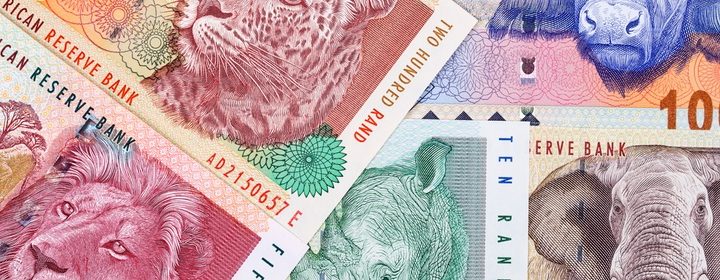
Cold hard cash

Debt statistics are growing – this is very likely in part to the fact that a vast majority of us today prefer credit cards over cash. The benefits of credit cards are obvious. They are more convenient and offer more security.

Cold, hard cash, however, can be the best way to organize your spending.

Here are three reasons why you should opt for using cash instead of credit cards for managing your daily budget.

1. Less likely to overspend

Healthier spending habits develop when you use cash. You become more mindful of how much each item costs that you’re putting into your basket, and you won’t want to spend all that you have. More self-control is gained, as you make less impulsive purchases of unnecessary things than you would have if you were using a credit, debit or store card.

Also, cash payments carry no interest rates that you will have to pay back later. You pay the amount on the price ticket, nothing more.

2. Become more engaged with your budget

You will become increasingly engaged with your budget when you work with cash. As compared to the possibility of inconsistent credit card interest rates, with cash you can easily track your expenditure, ATM withdrawal fees and how that favours against your income.

Budgeting and planning your expenditure can be a more enjoyable exercise when you use cash. You can easily reduce your debt too because no interest will be accumulating with every payment you make and you won’t be bleeding money on overspending.

3. Become more creative with your spending

Carrying cash can alter your financial mindset for the better. Since you’ll be limited to what you have in possession and not have the same spending power you get from credit cards, you’ll find that you will become more inventive with your spending.

The longer you challenge yourself to use cash, disciplined spending will become ingrained into your lifestyle as you’ll look for bargains, better deals and more ways to make your money go further.

Studies say that you develop an emotional attachment to items paid for with cash because you feel you made that purchase possible and it was not enabled by your creditor.

Consider the advantages of using cash before swiping your plastic. You can form a better financial identity and live without the drawbacks of credit cards when you go for cash. You can even develop a more mindful approach to your spending because your purchases will depend literally on how much you have in hand.


Three ways to thrash your debt

Effectively managing your debt is one of the best and most proactive ways of ensuring a sustainable financial future. It is deeply gratifying knowing that you’re doing something right when you see your debt shrinking!

The journey of exploring the best ways to manage your debt can improve your attitude and enthusiasm towards settling it. Instead of seeing it as a burden to your financial goals, you’ll recognise that it’s an inspiring investment towards your financial freedom.

Here are three often-cited ways to repay your debt.

  • Snowball method

The snowball method is frequently thought of as the best debt-relief option as it means you start off by paying the smallest debt and then move on to bigger loan amounts. This technique can be valuable for boosting morale and improving your sense of achievement as you start to see the results early on. Your debtor statements are reduced and you will be encouraged to continue with this debt repayment plan.

However, this means you end up paying higher interest costs, because it considers the payment of the debt and not the interest rates around it. To get around this, you can find other ways to refinance your high interest debts.

  • The Avalanche method

This strategy is the opposite of the snowball method. You start off with the biggest debt and finish with the smallest. If you’re looking to save on interest this is the best strategy to employ. 

This strategy requires patience as it doesn’t offer immediate results but, in the long term, you can be debt-free quicker. You need to have the resolve to settle bigger debts. From there you’ll be more motivated because only the small obstacles will be left. 

  • Debt consolidation

Through debt consolidation you can easily keep up with multiple payment deadlines by combining all your debts into one. This involves taking out one large loan, equal to the amount of your entire debt, and paying off what you owe in one place. 

The obvious risk is that you would now be using debt… to get out of debt. However, you will end up owing one creditor instead of many, and could potentially secure a more beneficial interest rate overall. When followed effectively this method can help reduce your debt whilst improving your credit score.

All three of these strategies can be useful for reducing your debt. Discipline is required with all of them because having the best strategy is not enough – you have to follow through with it too. 

If you need help with this – just give us a shout!

Are you a savings statistic?

Most Sub-Saharan African countries are chronic ‘dis-savers’. But, you don’t have to be. Before we look at the options, let’s take a snapshot of recent events.

Last July, the South African Savings Institute gave the country a wakeup call when it said that the average household rate had fallen from 0.5% per month in 2018 to 0.4% in 2019. 

While 2020 figures are not out yet (at the time of this blog) anywhere in the continent, there’s a likelihood of more challenging times – unemployment is rife, little to no growth pervades most asset classes and economies around the world are suffering mightily.

Another look at South Africa’s Household Saving Rate shows that it decreased to 0.20% in the fourth quarter of 2019. That means, of every R1000 coming into every household, R2 or less was being saved. (according to Trading Economics)

Desperate times

In the current economic climate, we are finding that very few people have an umbrella to help them weather the storm.

Last year, even before the current lockdown impact, over 80% of people did not have sufficient savings to last just three months if they lost their job.

Or, when faced with an unforeseen emergency of around R10 000, many people would have to ask family and friends for help, or take out a loan or cover the emergency costs with credit.

Numerous studies, including the well-known True South one a few years ago, show that many of us don’t have sufficient income protection cover or any other form of insurance, leaving us completely vulnerable when (not if) disaster strikes.

Are you one of the many or one of the few?

You are part of the greater statistic, and aren’t financially protected and prepared enough, if one or more of the following is true of you:

  • You do not have an emergency savings fund
  • Of every R10 000 you earn, R200 or less is saved
  • You do not have life insurance or income protection insurance
  • You do not have a financial plan worked out with a professional financial adviser

The good news about saving is that it’s never too late to start and more is always better. So, if any of the above sounds familiar, let’s have a virtual coffee and help you secure a sturdy financial future.

The long haul

Saving is not just about a plan – it’s a behaviour.

Part of this behaviour is rooted in our mental ability to overcome our own fears. We reduce these fears by mentally preparing for life goals and recognising that we have what it takes to achieve them.

Mentally preparing for long term savings is like preparing for a long-distance race or a trip. You start exercising today so you can cope with the physical demands of next year’s marathon. You sort out your travel necessities now so you don’t struggle with them when you have to go on your trip.

The same goes for your long-term savings. Starting to save today helps to accumulate more wealth for the future; anticipating and providing for the expenses that you expect to incur.

Here are four ways to help you prepare for a financially secure future:

1. Set a goal and start saving as soon as you can

Establishing a monthly budget helps you develop healthy spending habits, reduce your expenditure and have more to invest. Having a goal is a big part of this process because it’s really hard to save if you don’t know what you’re saving for.

The value of saving early is that you’re creating an opportunity for your money to work for you longer through the value of compounding interest.

2. Start working on your debt

Being engaged with your budget means being engaged with your debts too. Actively dealing with your debt now, frees up money to direct towards your future. Picking a debt management plan that will work best for you and your unique goals is the first step.

Diminishing your debt should be one of your goals. Seeing your debt decrease will encourage you to save and build more wealth for your future self. There are various strategies you can use to settle your debt in a way that works best for you.

3. Stick to your retirement plan

It’s like sticking to the road map, even if there is construction along the way. Having a retirement plan can help you look into your future more optimistically because you’ll be comfortable knowing steps to ensure it have already been taken. This can be really hard when markets bottom-out or there is a major crisis – but this is when it’s even more important to stick to YOUR plan.

If you’re struggling to stick to your plan, consider doing your research on the various retirement plans and consult your financial adviser for help with balancing your investments or maximizing your tax advantage in order to build a substantial investment portfolio whilst creating more liquidity for your current situation.

4. Adopt a more positive outlook on your finances

Developing a positive outlook towards money begins with you understanding that a life of abundance is created by starting to enjoy what you have instead of focusing on what you think you need. It’s about stopping to smell the roses on your long-distance run, or taking a break to drink in the scenery on your road-trip.

Learn to make saving a part of your lifestyle. Recognise that short term savings can be good but prioritizing long term savings can create a more sustainable future for you. See it as a way of ensuring you have more spending power in the future.

Partnering with a financial adviser can help you put a plan into place – but also change your behaviour and attitude when it comes to money to make sure that your complete financial plan supports the life you want to lead and the legacy you wish to leave.

Soup’s on ain’t a soupçon!

As the days draw shorter, the sun stays hidden for longer and the colder weather encourages us to hibernate away, coupled with constrained financial conditions, we can be forgiven for falling into the trap of thinking smaller, trying to save both money and energy.

When it comes to cooking for the family – here’s a great idea to stretch out a little, as if the sun is shining warmly again.

Soups! They are jam-packed with vitamins to help you fight against the flu, the ingredients are basic, it’s affordable, you can keep it for ages if frozen and… it’s a great hot meal!

Warm, hearty foods on a cold day both comfort and sustain. Slow cookers can be bought for relatively cheap and use little energy – so set the soup up before you head out, and arrive home to a delicious aroma – and a delicious supper.

Let’s be honest, convenience is expensive; cooking from scratch means that you can buy vegetables and other ingredients in bulk while they’re on special and cook up batches of soup or stew that can be kept in the freezer for another few days. (Fresh fruit and vegetables are one of the most price variable foods, so it is generally better to buy what is in season.)

The other great thing about soups is that most vegetables can be used in their entirety (leaves, skin and all), without wastage or extensive prep time.

Hosting a soup party is a great winter alternative to a braai. Both have a casual atmosphere and instead of everyone bringing their own meat, guests bring soups, breads and cheeses.

Serving with soup mugs instead of bowls is a great way to keep things informal and everyone can dish up for themselves. There are literally thousands of soup recipes online to keep everyone happy – from hearty to creamy to spicy.

Once everyone has settled down – let the games begin! With everyone gathered around, soup mugs in hand, it’s the perfect time to introduce a game. There are lots of free smartphone apps that can work for group games, the trouble is finding a good one (I would recommend Heads Up!). If you’re a bit more old-school then feel free to break out a board game or cards.

The point of this blog is to highlight that it’s still possible to have a healthy meal and some good old-fashioned fun without spending a fortune on a fancy, formal dinner. Food is an everyday necessity that can be effectively used as an area for cutting down on costs, without sacrificing on nutrition and taste.

When Rona hits your wallet

Whilst we may try our best to keep our bodies safe from the flu – we may overlook the sluggish money myalgia that can hit us around this time too! You might have financial flu…

Every winter our communities are hit by different strains of coronavirus (root of the common cold and flu). COVID-19 is the latest strain that initially impacted our health systems, and then quickly affected our financial systems and virtually every other area of society, politics and the economy.

As with our bodies where some of us are more resistant than others and show very little symptoms, our financial situation may be more or less resistant to financial flu. We might handle financial stress very well, and bounce back quickly, but some of us may not.

People around the world are currently under financial stress – which will lead back to physical and emotional stress too.

This typically shows up in the difficulty an individual or household could have in meeting financial commitments due to both a shortage and/or misuse of money.

Many of us with financial flu may find that we are stressed continually about our finances, specifically around things like: short-term debt, car and credit card payments; extended family obligations; not being able to save; not having enough for any emergencies; and school or university fees.

Being able to list these different stresses helps us talk about them and deal with them, one at a time.

In 2017, Sanlam’s Benchmark survey cited that short-term debt was the biggest source of stress. Not much has changed.

Viresh Maharaj, CEO of Sanlam Employees Benefits: Client Solutions, rightfully pointed out that this stress would be considered an epidemic if we were referring to a disease. “If this was the flu, then 70% of South Africa said they’ve got the flu at the same time, it would be headline news.”

In most countries the middle class is the backbone of the economy and pays a substantial part of the country’s tax system. A lot depends on this sector, so these levels of stress are concerning.

If you are feeling like this resonates with you, and you’re showing similar symptoms, one of the conversations you might like to have is around conspicuous consumerism, as well as demanding economic conditions. The advertising industry has created “a culture of consumption on steroids” that needs to be addressed. Maharaj also ascertains that “while the National Credit Act includes various checks and balances… it doesn’t address the fact that being able to pay for something is not the same as being able to afford something.”

The findings from the Sanlam survey suggest that many middle-class citizens may struggle to meet short-term goals, which may have a knock-on effect of limiting their capacities to ensure they have enough funds to properly provide for their retirement.

Many individuals seem to be focusing on immediate financial concerns, and socio-economic constraints mean that the retirement funding issue isn’t being resolved. In the survey, over 60% of respondents “said they would work beyond retirement age, while 73% said they would reduce their current standard of living.”

However, we don’t have to be part of this statistic. Now’s the season to get our financial flu jabs and build up our immunity to making costly financial decisions. Protect yourself from any kind of flu this winter by seeking advice and taking the appropriate measures to ensure your long-term financial wellbeing.

How to emotionally distance when investing in tough times

Current investors have seen more ‘interesting times’, more black swans and market freefalls, than any other generation gone before.

From the 2008 global financial crisis, followed by the longest bull run in history, to Brexit, several downgrades for South Africa and then the COVID-19 pandemic, today’s investors have run the gamut. Their emotions have run the gamut too, whether they realise it or not.

Our brains on investing

Like being chased by a lion or falling in love, our management of money produces very specific chemical reactions in the brain that are as primal as they are underappreciated. Take a look at how CNBC describes it:

“In his book, “Your Money & Your Brain,” journalist Jason Zweig explains that financial losses are processed in the same part of the brain that responds to mortal danger. As investors see their investment portfolios plunge, our amygdala kicks into high gear. The amygdala plays a crucial role in processing and steering our emotions, such as fear and anger, allowing us to respond quickly to dangerous situations. The ongoing communication between the amygdala and rational input given by the prefrontal cortex can be stunted in times of emotional threat, such as a financial loss. This communication disruption is also known as the amygdala hijack, and, essentially, the prefrontal cortex is disabled, preventing us from making sound, rational decisions.”

First, become aware of the problem

What’s interesting about investment is that, unlike a lion attack or falling in love, almost everyone thinks that they’re not being emotional. Not understanding the basic ‘trading psychology’ as it’s known behind the amygdala hijack lends it power.

We all know the age-old adage of ‘buy low and sell high.’ Never is that more applicable than in market carnage such as that caused by COVID-19 and the 2008 financial crisis. To sell during a bad time, could be to take the biggest loss and miss the biggest opportunity in modern investment history. And we know this, logically, we do. So why do so many people sell anyway?

Because to sell is, for the amygdala, to escape the ‘lion’. It just wants to get out – it doesn’t care that such an emotional move could cost us our retirement.

But if one is aware of the problem, of the trading psychology behind our amygdala screaming at us to sell, it becomes a little easier to emotionally distance ourselves from the decisions.

Emotionally distance

One of the challenges that we all face is overcoming the powerful impulses to escape the lion.

We need to remind ourselves firmly that our emotional urges are not us.

And they are not sacrosanct, we can choose to obey them or ignore them.

Language helps a lot. Instead of thinking ‘I am freaking out’, think rather ‘my brain is freaking out.’ An investor who knows trading psychology thinks: ‘my brain is short-circuiting because of what it perceives as a dire situation’. An investor doesn’t think: ‘I need to get out.’

Also, look for inspiration. Keep a quote by Warren Buffett next to your desk when you do your day-trading, or whatever it might be. Thinking with the wisdom of others, even if it is by proxy, distances yourself from the tunnel vision which is so easy in a moment of panic, which tricks us into thinking that the way a problem appears to us is the only way to look at it. For example, to look at COVID-19 or Brexit stock market crashes as a disaster rather than an opportunity.

Don’t aim for being a robot

The aim here is not to suppress all emotions until you have none as an investor. Completely emotionless investing, as most experts will tell you, is a myth. Feel the fear, but don’t let it master you. Emotions are important, but we need to be able to deal with them in a positive manner.

Get help

Good, solid financial advice is invaluable – especially in tough times when emotional reactions are likely. Seek out a financial advisor who understands volatility and let their experiences work for you.

Ensuring that you don’t make any investment decisions or portfolio changes without your adviser’s input is also a handy way to not act in the spur of the moment. You may wake up at four in the morning worrying about your retirement, convinced that you need to dump all your equities immediately, but in the cold light of day such kneejerk reactions might look very, very different.

Ultimately, it’s you and not your emotions that are in charge when it comes to managing your money. Keep that in mind and you’ll be able to weather the storm ahead.

Tips for when markets recover

The last few years have seen more market volatility than anyone could have predicted, with the icing on the cake being the COVID-19 pandemic. But the best and worst thing about markets is their cyclical nature. All markets recover, eventually.

We know what to do when there’s a downturn and experience has taught many investors some hard lessons with recent stock market crashes. But what about an upswing? What do you do when the markets recover – and what should you avoid?

Don’t.. let it get to your head

Sometimes, it’s helpful to think of the stock market as a wild animal: make no sudden movements. Just as good financial advisers tell people not to panic and sell low in the nadir of a stock market crash, people should also not get overly excited when markets start recovering and buy everything in sight.

An economic downturn is not the time to cash in your retirement and an upswing is… also not the right time to do it. So, when is?

Do… keep to a big picture plan

The best time to do something like cash in your retirement savings, add something new to your portfolio or dump certain stocks is when it works in line with your long-term goals, specific to your goals and your risk appetite as carefully thought out by you and your financial adviser.

If you watch only the market, you will be tempted to buy and sell everything you own several times a day. If markets are nose diving but you are thirty years away from retirement, that nosedive has absolutely nothing to do with you. Keep to a long-term plan as worked out by your financial plan to avoid going crazy and not being blown about by every single headwind.

Do… stick to the classics

Tried-and-true brands and names that have stood the test of time are likely to survive your long-term plan. Go for “Think of your Warren Buffett-type companies: the Visas, the Microsofts, the Coca Colas of this world… the biggest companies that you are 100 per cent sure can get through recessions, coronaviruses, or any other panics that may come along,” advises David Coombs on This is Money.

If the markets are just beginning to recover, you can likely acquire stocks at a lower price than usual. Just make sure you get it before they get too expensive again.

Don’t… go it alone

There is a reason why financial advisers, wealth managers and stockbrokers have full time jobs. Not only is being able to deeply understand the stock market a very hard-won skill honed over years, it’s a very risky one that can turn on you at any moment.

The value of expert financial advice is irreplaceable when it comes to anything on the stock market, even seemingly simple scenarios like a market recovery.

Mid-Year Money Check

Many of us only look at our financial plan when we receive a windfall (this is not often…) or when things go terribly wrong. It could be the loss of a job, the loss of a loved one or another crisis (like a global lockdown…).

These aren’t necessarily the best times to make investment decisions or changes to our financial plans as emotions are often running extremely high during times of transitions and our stress levels will be elevated.

That’s why taking the time to do regular (quarterly or biannual) reviews gives you a better baseline from which to assess your portfolio and keeps you in the practice of being aware of what’s going on with your money. This is often easier said than done, and if you currently find yourself needing to make some changes, and are highly emotional or stressed, make sure you include an impartial third-party to assist you with this.

Your review should consider each of your financial priorities and your strategy for reaching them. If the conditions have changed, adjustments need to be made to make these priorities attainable in your desired time frame. Again, don’t feel pressured into doing this alone – include the others in your family who contribute to making and spending your combined income, and bring in your financial adviser.

As you do this, you will quickly notice that your priorities will change, you may need to rebalance some of your investments or portfolio products. This is okay – being flexible inside of your plan is as important as checking in with it regularly.

Thinking about a will, health care proxy, and power of attorney can be uncomfortable, but the alternative is letting someone else make these decisions for you. If you don’t have these key documents, take the time to set them up. If you already have them then a review might be in order. Life events such as moving, having children or grandchildren, or losing a loved one can have a big impact on your overall plan.

Careful, regular planning is essential in all economic climates. Are you preserving your assets? Are you protecting your income? Are you saving tax efficiently? A review can help prioritize financial decisions that you need to make to support your own and your family’s goals across generations.

Living annuities and how they affect your living

Oh, the ironies of life… 

One of South Africa’s most contentious laws regarding annuities states that a retirement fund may not be completely withdrawn in a lump sum, but a minimum of two thirds must be invested into a compulsory living annuity in an attempt to aid preservation of retirement money. Even those who are well informed about their retirement money sometimes forget this element of their annuities.

Then along came the Coronavirus pandemic with global lockdowns.

On 23 April, Treasury announced new living annuity drawdown relief measures for COVID-19 that effectively neutralise their living annuity laws.

The new proposed measures are to be disseminated under the Disaster Management Tax Relief legislation, and will be rolled out between 1 May and 31 August 2020.

So, what do we need to know?

Living annuity drawdown changes

Under the existing annuity regulations – the owner of a living annuity is currently restricted to an annual drawdown (which is usually paid monthly) of between a maximum of the investment value of 17,5 percent and a minimum of 2,5 percent, paid out monthly. These were designed to help us avoid spending too much too soon – some agree, some don’t.

This will be effectively side-swiped by two relief measures which once again unlock your annuity – but is that for better or worse?

Changing drawdown amounts

The first COVID-19 concession, obviously thought up for people experiencing cash flow issues in the wake of the pandemic, is that annuitants can increase or decrease their drawdowns (the amount of cash they receive at any one time from their annuity) as soon as they need to. Ordinarily, annuitants can only make such changes once a year at the annuity’s anniversary date and there are a whole lot of rules governing it, so that people can’t ill-advisedly just elect to get higher and higher drawdown amounts and run the risk of their retirement money running out too quickly.

This is a useful concession for one of the worst-hit segments of the population in terms of COVID-19’s financial impact: the elderly. However, the danger is that less financially astute retirees will see this as a nice payday and draw down a large amount and spend it, not taking into account the many years of economic hardship still likely to come from the pandemic. Of course, the other option to decrease drawdown amounts is also there, but realistically, it will be an unlikely choice for many.

Drawdown limit changes

Just as with the above meaning that people can change their drawdown amounts now, the second rule allows for the amount to change as well. The existing regulations attempted to encourage preservation by limiting drawdowns to a maximum of 17,5 percent – now annuitants will be able to withdraw 20 percent. While this number may seem small, it adds up quite a lot when dealing with the large sums in annuities. Think, for instance, of the difference between R175 000 and R200 000 in a modest living annuity. That is R25 000 less for the unknown amount of years still to go which this annuity needs to last for.

Conversely, the minimum amount has also been changed, from 2,5 percent minimum to 0,5 percent, in a bid to encourage people to save more and not less.

The danger, as with almost all things retirement, is that annuitants’ money will run out too soon. And retirement during the fallout of the Coronavirus pandemic promises to be no picnic: we have no idea what the value of the rand, inflation and various asset class values will do in the many years it will take for the world and country to economically recover. Treasury runs a serious risk of annuitants joyfully giving in to instant gratification and viewing the relief measures as a windfall or unexpected extra payday, with an eye on spending rather than keeping a watchful eye on their dwindling retirement savings.

If you have a living annuity or know of someone with one, good financial education is key to understanding the temporary regulation changes and the inherent flexibilities as well as dangers that they hold. Here, as always, sound financial advice is worth its weight in annuities.